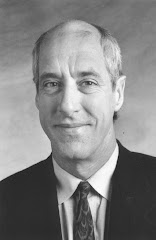
A recent poll among Republicans shows Gov. Bobby Jindal has slipped from even the second tier of GOP presidential prospects. Yet he still has no trouble raising money out-of-state or making headlines on the national stage, though perhaps not the kind he had in mind.
During his fundraising trip to Washington last week, the governor gave an interview to Politico, an on-line magazine read closely in the capital, that briefly thrust him into the middle of the healthcare debate--uncomfortably, that is, between the Obama White House and Republican leaders in Congress.
With the Senate Finance Committee preparing to vote on a bill opposed by nearly all Republicans, Jindal told Politico, "I think now is the perfect time to pivot and to say, not only here's what we're against . . but here's what we're for."
The headline read, Jindal to GOP: Work with Obama.
Jindal's remarks were not much different from what he's said all along about healthcare, but his timing and calling for Republicans to "pivot" was seized upon by White House press secretary Robert Gibbs, who in that day's press briefing said, "I think I saw one of the more popular Republican governors, Bobby Jindal, say today that it was time for Republicans to offer what they're for, not just talk about what they're against." And he urged the GOP leadership to listen to the young governor's call for cooperation.
They heard him, all right, none too happily. Jindal's remarks were likely galling to many Republicans, including the one who succeeded him, Rep. Steve Scalise of Metairie, who has written the president asking for a meeting to discuss areas of agreement and to offer alternatives.
If Obama and Jindal were to kick back over a beer, they would agree on insurance portability and coverage for pre-existing conditions, as the Republicans have. But they would disagree over the Medicaid expansion and penalties on employers who don't offer coverage, as the Republicans have.
So, besides his choice of softer words, Jindal's position on healthcare is the same as the Republican leadership's and just as irreconcilable with the president's. Yet the White House cast Jindal as Mr. Reasonable, whose example the GOP hacks should follow.
By then, the governor may have noticed he was being used. He sought to create some distance from his new admirers in the White House by responding in a statement, "The American people do not want to raise taxes, increase government spending or give government more control of our healthcare system."
But the story had moved on and congressional Republicans were no doubt pleased to see Jindal return home to resume his schedule of ribbon-cutting and medal-pinning ceremonies.
Besides image, however, there is another big difference between Jindal and congressional Republicans, that could explain his conciliatory tone. GOP congressmen can speak against, vote against and run against whatever healthcare bill the Democrats manage to pass. But Jindal, like other Republican governors, will have to take it and make it work within the budgets and frameworks of state government.
Provisions of bills being debated, if they become law, would fundamentally change public healthcare in Louisiana, spelling the end of the charity hospital system as we know it. Jindal's plans for overhauling the state's Medicaid program would have to conform to new federal rules.
Beyond that, Louisiana seeks special treatment from the feds on pressing healthcare issues. It desperately needs a $1 billion fix on its Medicaid match rate, caused by an artificial spike in personal incomes in the post-hurricane economy.
Also, if the state doesn't get all it seeks in arbitration with the Federal Emergency Management Agency to replace Charity Hospital in New Orleans, the president has said he would consider providing additional funding.
How those crucial matters are resolved could largely define Jindal's first term and shape his reputation as a problem-solving, can-do governor. Success greatly depends on cooperation from the Obama administration and, whether conservative voters like it or not, a good working relationship between the governor and the president.
So if Jindal's comments proved useful to the White House, it is hardly a bad thing for him or Louisiana. With so much on the line, I'd kiss up too.
Showing posts with label Governor Bobby Jindal. Show all posts
Showing posts with label Governor Bobby Jindal. Show all posts
Tuesday, October 13, 2009

Saturday, October 3, 2009
Kennedy Steals the March on Government Change
He's been so busy lately, helicoptering to every corner of the state to deliver jumbo-sized ceremonial checks to parish officials, to pin medals on veterans and to attend church services that Gov. Bobby Jindal must have missed that, back at the Capitol, someone else was leading the charge to cut state government down to size.
Treasurer John Kennedy is merely the chairman of a subcommittee of an advisory panel for streamlining government, but he grasped its publicity potential and has stolen the march on not one but both blue-ribbon commissions on budget-cutting and restructuring.
Kennedy has been traveling the state too, not as deeply into the piney woods as Jindal, but rather to Chamber of Commerce luncheons and editorial boards to promote his big ideas for change, from a 15,000 reduction in state employees to a single board of higher education.
Going strictly by appearances, Kennedy is looking like a governor; Jindal, a lieutenant governor.
Appearances deceive, of course. The governor does focus intently on economic development opportunities. And his staff has been actively engaged with both commissions, particularly the Postsecondary Education Review Board, exploring how to make a big idea like a single college management board actually work.
But with Kennedy capturing the limelight by default, Jindal may have felt the need to re-assert his role of budget-cutter-in-chief.
If so, he chose a curious way to go about it, by giving both commissions specific dollar-amount goals for budget reduction recommendations: $802 million from the streamlining commission and $146 million from the college board.
Nothing wrong with defining the challenge and setting goals. He could have done that six weeks ago when these groups first met. Instead, at that time, he urged panel members to be bold and think outside the box.
His job, it goes without saying, is to deal with the box as it is. The streamlining commission should be free to come up with creative, innovative suggestions that, if any of them worked, could save big money. But it is the governor's responsibility to meet the projected $948 million deficit when he presents the executive budget next March. It would be interesting, also comforting, to hear what specific ideas he has come up with already.
When it gets down to the reality of writing a balanced budget, Jindal has his own streamlining commission. It's called the Division of Administration. Commissioner Angele Davis, who sits on the streamlining panel, probably already has considered most of the recommendations that will come up. She gave an impressive presentation on what she's doing now to control costs throughout state agencies, such as a moratorium on buying cars. It didn't come close to $802 million, but it was a start.
That's more than the education board has accomplished. Comprised mostly of out-of-state experts with their own busy schedules, that commission has met only once, has yet to elect a chairman or set a direction for what it wants to get done.
It's unrealistic to expect the educators to make serious recommendations on cutting 15 percent of state spending for higher education. They would better serve the state by sticking to their original mission to recommend broad, even sweeping changes in how management systems are structured. Once a new plan is in place, it would be possible--more than now--to reduce costs through the merger of programs, even campuses.
The big idea, a single board, is not a new one--and Kennedy is out there running with it already. Board members and the governor's staff, especially executive counsel Tim Barfield, have been having deep discussions about what kind of new regime could replace the current five boards.
Such a far-reaching, controversial proposal--requiring constitutional change--is more effectively advanced after the vetting and seal of approval of a blue-ribbon commission of outside experts.
If the governor gets that much out of the education board, he shouldn't be disappointed if it doesn't also tell him how to balance his higher education budget. It will have served a higher purpose.
At that point, the governor can put away his poster checks and medals and travel the state with a game-changing big idea to discuss, with the stage all to himself.
Thursday, September 3, 2009
Panels Brainstorming Smaller Government
One could sense the collective yawn and rolling of the eyes when Gov. Bobby Jindal urged two separate commissions on down-sizing state government and higher education to be bold, to think big and to come up with recommendations that won't just gather dust on a shelf, as has happened in the past.
Skepticism abounds, for these advisory panels, like those before, can think outside their boxes all they want, but it's the governor and the Legislature who have to follow through to make government institutions any smaller, as has not happened in the past.
This time, however, with state revenues in steep decline for years to come, change is going to happen, the only question being if and how government and higher education will work when it is all done.
One would think Jindal, with his big-picture vision and laser-like focus, would not need a couple of blue-ribbon commissions to tell him what needs to be done. Nor is the Legislature clueless.
What they both need is outside validation and broad-based public support for the hard political choices to curtail government services and shrink universities.
For that, the Commission on Streamlining State Government and the Postsecondary Education Review Commission could prove useful, not to mention quick and cheap for government work.
With only four months to report back, the streamlining commission is taking a broad look at state government instead of drilling down into each agency. "We want to make sweeping recommendations," said its chairman, Sen. Jack Donahue, R-Mandeville, with the aim of saving hundreds of millions of dollars.
Off the top of his head, he suggests centralizing human resources and technology support instead of every agency having its own staffs for those functions. The governor urged the streamliners to look at merging some state agencies and privatizing and outsourcing the work of others.
Comprised mostly of state officials and with minimal operating expenses, if the streamliners come up with one $10 million idea that the Legislature buys, the effort won't be wasted.
The higher education commission, however, needs to do better than that, given the serious and growing shortfalls for college budgets. There are those who won't be satisfied with anything less than the closure of three or four of the state's 14 four-year universities. That's not going to happen.
According to a web site that tracks universities that have closed, since 1945, the number of public four-year colleges in the country to shut down is three: in South Dakota, North Dakota and Minnesota. More four-year colleges have become two-year schools, but as major economic engines of any community, they don't just go away.
Instead, the governor asked the commission, comprised mainly of out-of-state experts and Louisiana private citizens, to look at right-sizing the schools we have. In Louisiana, 75 percent of college students attend four-year universities and only 25 percent go to community colleges, while nationwide, it's closer to 50-50.
The governor proposed a solution straight out of Economics 101: raise admission requirements at four-year schools in order to divert more marginal, less-prepared students to community colleges, where the cost per credit hour is far cheaper, both for the state and the student.
The economic impact of the poor graduation rates of Louisiana universities is seen in students who flunk out or quit after a few semesters, but are saddled with their student loans for years. If the same students start at community colleges, they would borrow less with far greater chances of earning associate degrees, which lead to better jobs or admission to four-year schools.
Enticing unprepared students to take out loans to go to universities where they will fail morally equates to the worst practices of the sub-prime mortgage industry.
The idea of raising admission requirements is not new, but neither has it been embraced by university leaders and their local legislators, who fear losing enrollment on which funding and jobs are based. Fortunately, the colleges have a voice but not a vote on the college commission.
That will make it easier, or at least possible, for the panel to make and validate the kind of bold recommendations the governor will need to build public support around. It's going to take a lot.
Tuesday, August 18, 2009
Panels Brainstorming Smaller Government
One could sense the collective yawn and rolling of the eyes when Gov. Bobby Jindal urged two separate commissions on down-sizing state government and higher education to be bold, to think big and to come up with recommendations that won't just gather dust on a shelf, as has happened in the past.
Skepticism abounds, for these advisory panels, like those before, can think outside their boxes all they want, but it's the governor and the Legislature who have to follow through to make government institutions any smaller, as has not happened in the past.
This time, however, with state revenues in steep decline for years to come, change is going to happen, the only question being if and how government and higher education will work when it is all done.
One would think Jindal, with his big-picture vision and laser-like focus, would not need a couple of blue-ribbon commissions to tell him what needs to be done. Nor is the Legislature clueless.
What they both need is outside validation and broad-based public support for the hard political choices to curtail government services and shrink universities.
For that, the Commission on Streamlining State Government and the Postsecondary Education Review Commission could prove useful, not to mention quick and cheap for government work.
With only four months to report back, the streamlining commission is taking a broad look at state government instead of drilling down into each agency. "We want to make sweeping recommendations," said its chairman, Sen. Jack Donahue, R-Mandeville, with the aim of saving of hundreds of millions of dollars.
Off the top of his head, he suggests centralizing human resources and technology support instead of every agency having its own staffs for those functions. The governor urged the streamliners to look at merging some state agencies and privatizing and outsourcing the work of others.
Comprised mostly of state officials and with minimal operating expenses, if the streamliners come up with one $10 million idea that the Legislature buys, the effort won't be wasted.
The higher education commission, however, needs to do better than that, given the serious and growing shortfalls for college budgets. There are those who won't be satisfied with anything less than the closure of three or four of the state's 14 four-year universities. That's not going to happen.
According to a web site that tracks universities that have closed, since 1945, the number of public four-year colleges in the country to shut down is three: in South Dakota, North Dakota and Minnesota. More four-year colleges have become two-year schools, but as major economic engines of any community, they don't just go away.
Instead, the governor asked the commission, comprised mainly of out-of-state experts and Louisiana private citizens, to look at right-sizing the schools we have. In Louisiana, 75 percent of college students attend four-year universities and only 25 percent go to community colleges, while nationwide, it's closer to 50-50.
The governor proposed a solution straight out of Economics 101: raise admission requirements at four-year schools in order to divert more marginal, less-prepared students to community colleges, where the cost per credit hour is far cheaper, both for the state and the student.
The economic impact of the poor graduation rates of Louisiana universities is seen in students who flunk out or quit after a few semesters, but are saddled with their student loans for years. If the same students start at community colleges, they would borrow less with far greater chances of earning associate degrees, which lead to better jobs or admission to four-year schools.
Enticing unprepared students to take out loans to go to universities where they will fail morally equates to the worst practices of the sub-prime mortgage industry.
The idea of raising admission requirements is not new, but neither has it been embraced by university leaders and their local legislators, who fear losing enrollment on which funding and jobs are based. Fortunately, the colleges have a voice but not a vote on the college commission. That will make it easier, or at least possible, for the panel to make and validate the kind of bold recommendations the governor will need to build public support around. It's going to take a lot.
Monday, July 20, 2009
Moving Up by Staying Put
By John Maginnis
Simply by staying still, the political stars of the state's top two elected leaders are on the rise.
Lt. Gov. Mitch Landrieu announced last week he would not run for mayor of New Orleans next year, opting to stay in Baton Rouge, closer to his ultimate goal. Good choice. Even if he were to be elected mayor, hardly assured, the office historically is a dead end for political careers, even if he were to succeed in bringing the city together, also hardly assured. For his future, the best job is the one he has.
The same can be said for Gov. Bobby Jindal, for now anyway. His national star dimmed somewhat this year, but at least it didn't flame out, like those of now-former Republican presidential aspirants Sen. John Ensign of Nevada and Gov. Mark Sanford of South Carolina, both politically destroyed by their recently exposed extra-marital affairs. Their falls are significant because both had recently eclipsed Jindal, following his dreadful nationally televised speech in February, especially dynamic fellow Southerner Sanford.
On another front, Jindal, doing nothing again, also looked good compared to Alaska Gov. Sarah Palin, who stunned Republicans and disturbed some too by announcing her resignation mid-term. She will make a fortune on the speaking circuit and can focus freely on a potential presidential bid, but some Republicans see her move as erratic and opportunistic.
It might seem like a low bar, but just by honoring his marriage and keeping his job, Bobby Jindal is looking better and better as a leader in the Republican Party.
Yet, unless things change drastically, he most likely is no rival to Palin for the presidential nomination in 2012, nor is he to others mentioned as top early contenders: Mitt Romney, Mike Huckabee, Newt Gingrich, even Minnesota Gov. Tim Pawlenty.
The Louisiana governor, however, holds an important distinction compared to them all. Given Pawlenty's decision not to seek a third term in 2010, by then Jindal will be the only one of the above serving in public office. So much for the rap on him that he doesn't stay in any job for long. By 2012, seasoned by re-election, Jindal would make an attractive vice presidential candidate for any one of them.
Although he passed on being considered for the second spot on John McCain's ticket last year, next time will be different. If tapped, win or lose, he would be the party's likely frontrunner for 2016 or 2020, when he's 45 or 49.
Over the next three years, Jindal's star need not rise so much as just hold steady, while he stays prepared. Meanwhile, nobody's star is hitched so closely to his as is Landrieu's.
Before his announcement, the lieutenant governor said his decision would be based on where he could do the most good, in City Hall or the State Capitol. So we have his answer. Many hope that means he will challenge Jindal's re-election in 2011. Already he has assumed leadership of the Democratic opposition, criticizing the governor's funding cuts to education and healthcare and his refusal to consider tax increases.
Yet it's a stretch to see Landrieu taking his fight to Jindal on the ballot. Unless the governor is much less popular in two years than he is now, Landrieu's long-term, even short-term prospects lie with the unique office he holds.
In 2010, if Jindal (though he says he won't) challenges and defeats U.S. Sen. David Vitter, and then wins the general election, Mitch Landrieu is the next governor.
In 2012 (assuming they are both re-elected), if Jindal is tapped to run for vice president, and the Republicans win, Mitch Landrieu is the next governor.
In 2014, if Jindal, late in his second term, challenges U.S. Sen. Mary Landrieu—or she doesn't seek a fourth term—and he wins, Mitch Landrieu is the next governor.
If none of the above happens, in 2015, with Jindal leaving office, the political pendulum could well swing back to the Democrats. In which case, barring some upstart, at age 55, Mitch Landrieu is the next governor.
So, until then, why go anywhere? Patience and perseverance are not qualities ascribed to either man, but practicing such could get them both where they want to go.
Friday, May 15, 2009
What Payback? Jindal Gets His Way
MAY 11, 2009 POLITICS / JOHN MAGINNIS
Oh, the world of hurt Bobby Jindal was supposed to be in by now.
A month ago, his constant coast-to-coast fundraising was straining the patience of even his friends, who wished aloud that he were spending more time at home dealing with the state's problems. And there were plenty of those, mostly linked to a gaping budget deficit, which promised to make his first legislative fiscal session a miserable one. Add to that, lawmakers, still harboring grudges for his vetoes of their pay raise and scores of local projects last year, were said to be lying in wait for payback.
It looked like an ominous session indeed for the governor, until it began, when the scene at the Capitol snapped back to the old reality. In the first two weeks, the governor's staff efficiently snuffed out or sidetracked bills the administration opposed, advanced ones it liked and easily fended off legislators' initial budget raids on his economic development mega fund.
He also demonstrated a grasp for the art of the deal by proposing creative terms for a new long-term contract with the New Orleans Saints while at the same time pushing approval of spending $50 million to save a chicken processing plant in Northeast Louisiana. The two are not connected, but politically they are wed, with regional support for each neutralizing opposition to the other. The unspoken linkage of the two makes for a pretty slick deal, worthy of Edwin Edwards, and it's even legal.
What did Jindal do to reassert his influence and authority over a resentful Legislature? Why, he showed up, which is pretty much all that's needed in a political system that affords so much power to a governor when he acts like one.
Democrats outnumber his Republicans, especially in the Senate, but partisanship has yet to come into play in this session. The most direct challenge to Gov. Jindal's fiscal policy, the proposed cigarette tax to restore healthcare cuts, has not unified Democrats.
They will band together more to challenge his refusal to accept $98 million in added unemployment benefits from the federal stimulus package, but supporters concede it won't be enough to overcome his promised veto.
The issue that is causing Jindal the most trouble, at least in the public prints, comes at the hands of two Republicans. He has strongly opposed identical bills by Rep. Wayne Waddell of Shreveport and Sen. Robert Adley of Benton to make public more records in the governor's office, which is currently rated among the least transparent in the nation.
The governor's broad exemption from the public records act predates Jindal, but it perfectly suits his control personality that is reflected in his protective, insular staff.
Legislators and his contributors learned quickly not to expect return phone calls from the governor. He talks to people when he needs them, not the other way around.
Formalizing any more access to his office is not in his interest. The legal contortions New Orleans Mayor Ray Nagin is going through fighting the release of his schedule and e-mail probably makes the governor all the more careful to not let down his public records shield.
Now if legislators were truly seeking revenge for Jindal's veto of their payraise, they would pass a public records law opening up his office like a sardine can.
That they haven't suggests the notion of veto payback is vastly overstated. Legislators may still resent his nixing their raises, but some concede he did them a favor. What if they were pulling down $50,000+ in total compensation while considering big budget cuts that would force layoffs in higher education and healthcare? Half of them would be facing recall petitions and harboring little hope of re-election. The mistake he and they both made was in forming their secret pact, which intense public anger, acting as a force majeure, nullified.
Lawmakers might still pass a public records bill Jindal doesn't like, or find some other vote on which to stick him. But most of them, when it gets right down to it, want to stay in the governor's good graces, even if he ignores them most of the time.
Subscribe to:
Posts (Atom)